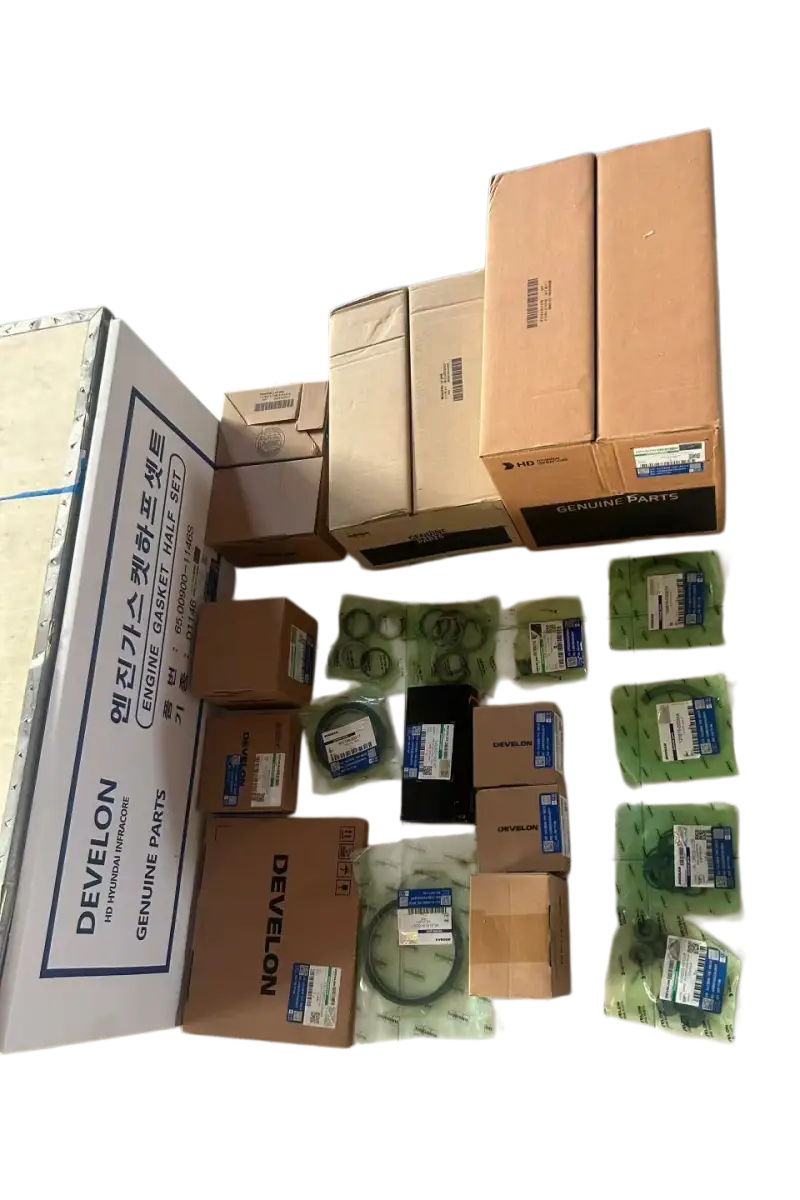
Where to buy doosan part
When a machine is down, a generator is waiting for a service item, or a boat is tied up for an engine repair, a search for “Doosan engine parts” can return very different buying routes. One page may show a dealer locator, another may list a used component, and a third may offer an aftermarket replacement. The photos can look similar while the engine revision, application, region, and support terms are not.
For a non-OEM replacement, start with an established aftermarket parts channel that can match the application and identifiers, then use official catalogs or dealer tools as reference points for identity and product-line scope. This guide is prepared from the perspective of an aftermarket Doosan engine-parts channel, not the manufacturer or an official dealer; the channel’s job is to help buyers match replacement parts to the correct application and identifiers. Route the request by construction equipment, portable power or generators, marine engines, or forklifts; send the engine model, serial, photos, and existing number before asking our aftermarket parts channel for a quote.
Key Takeaways
- Route the request by application first: construction equipment, portable power or generators, marine, or forklift.
- Send the engine model, engine serial, machine serial where applicable, data-plate photo, existing part number, and revision.
- Genuine/OEM, aftermarket, remanufactured, service-exchange, and used parts are different source categories; compare evidence, condition, and terms.
- An online listing or photograph is a starting point, not proof of fit, authenticity, stock, warranty, or delivery.
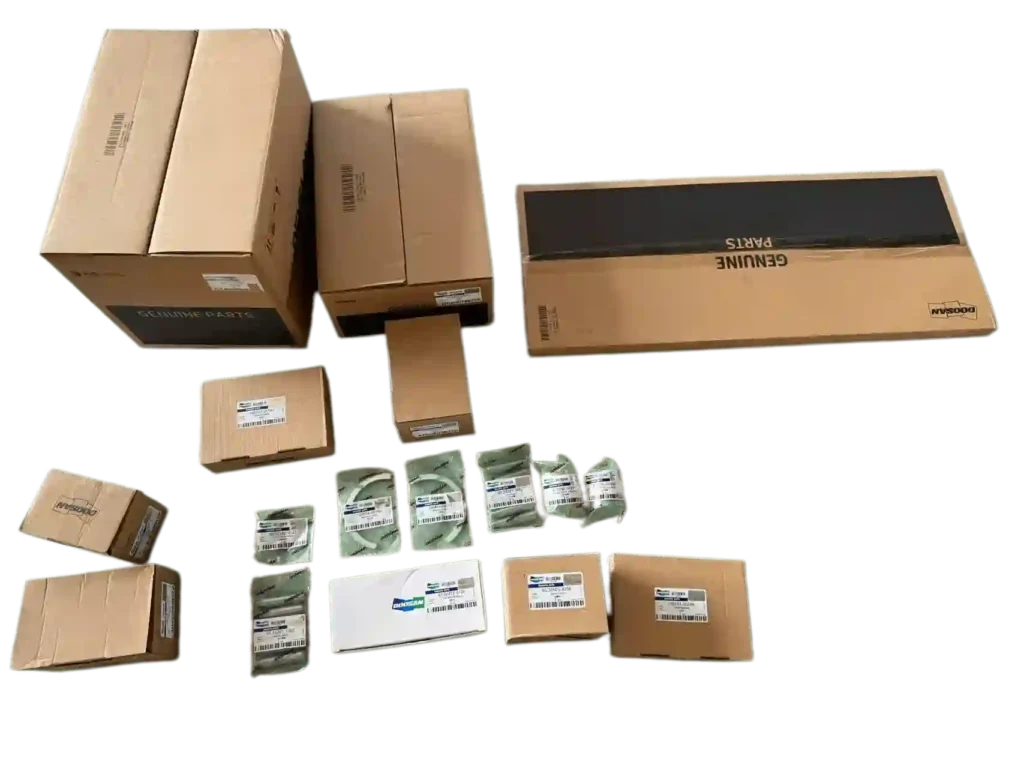
How Do You Choose the Right Doosan Engine Parts Channel?
Start with the engine’s application and urgency, then ask an established aftermarket parts channel to verify the exact replacement before comparing official references, specialists, or used listings. The wrong channel may understand excavators but not marine auxiliaries, or know a part family without knowing the revision on your data plate.
The practical routes are different rather than interchangeable:
- Aftermarket parts channel: Use this route when you need a non-OEM replacement, a legacy component, or a second source to compare against an official quote. The useful channel will ask for part number, state that it is non-official, and put fit, condition, source status, and commercial terms in writing.
- Official catalog or dealer route: Use the official reference to confirm the name of a product line, locate a parts book, or check how a regional construction or portable-power network presents support. A location tool such as the HD Hyundai Construction Equipment dealer finder is a way to find a regional route, not a promise that a particular legacy part is stocked.
- Application specialist: A generator, marine, portable-power, or forklift specialist may understand the operating context better than a general construction-parts storefront. Ask the specialist to match the engine identity rather than accepting a family name as enough.
- Used marketplace: This can widen discovery, especially for older equipment, but it adds condition and provenance questions. Treat the listing as a lead until the seller confirms the exact number, configuration, condition, and return terms.
Imagine comparing a dealer quotation with a marketplace photo while a loader is waiting in the yard. The lower displayed price does not remove the need to check the serial, revision, and return route. An official name on a page does not automatically make it the right route for a marine or generator engine. Keep discovery separate from confirmation.
Before asking for price or delivery, send the application, model, serial, plate photo, part number, condition, and destination. The next task is proving which engine and revision the part belongs to.
How Do Doosan Engine Parts and Serial Numbers Work Together?
The engine model, engine serial, machine serial where applicable, data plate, existing part number, and revision narrow the catalog to the right application and version. A model nickname may start the search, but it rarely carries enough detail for a fit-ready order.
Which number identifies the engine?
The engine model names the family or configuration; the engine serial identifies the individual build or production sequence. A machine serial identifies the excavator, generator set, forklift, or other host equipment, which may be different from the engine identity. The data plate is the physical label that lets a supplier read those fields instead of relying on typed memory. A stamped or printed part number describes the candidate component, while a revision can distinguish an earlier or later design.
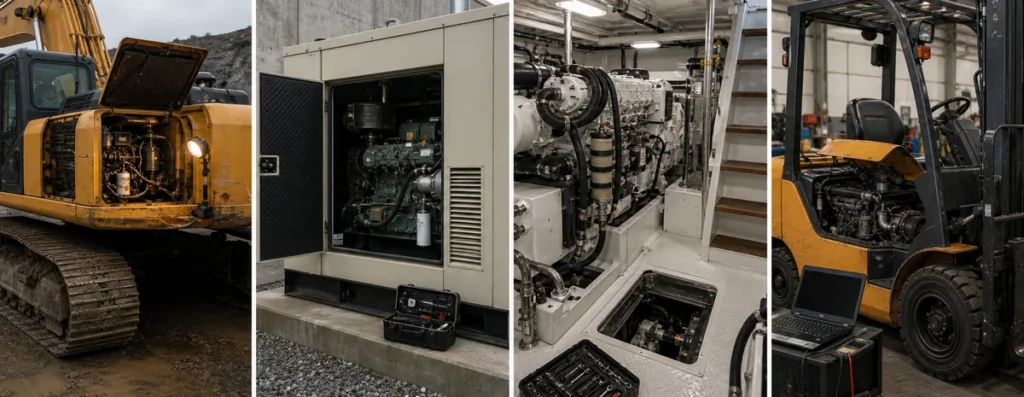
Official portable-power publications use parts manuals, exploded diagrams, and serial-code information to support lookup; the technical-publications route is a reference for that workflow. The same logic helps an aftermarket channel check other applications, but identifiers do not prove authorization or genuineness.
What should you send with a part number?
Send a short, copy-ready brief rather than a single number:
Nameplate: excavator, generator, portable compressor, marine engine, forklift, or other host. Engine: model and serial as printed on the plate. Machine: model and serial where the engine is installed in a larger unit. Part: existing number, description, side or position, and revision if shown. Photos: full data plate, old part label, connector or mounting face, and the surrounding assembly. Condition: new aftermarket, remanufactured, service-exchange, or used, if you have a preference. Destination: country or region and the required decision date. Confirmation request: ask the supplier to state what was matched and what remains unconfirmed.
How Do You Choose an Aftermarket Doosan Engine Parts Supplier?
An aftermarket channel can be a practical alternative when it proves exact fit, source status, condition, support, and written terms; it must be labeled as non-official rather than presented as the manufacturer. Aftermarket describes a supply category, not an authorization badge or universal quality grade.
Look for three kinds of proof:
Fit evidence. The supplier should work from the application, engine model and serial, machine serial when relevant, part number, revision, and photographs. Ask which of those fields were actually matched. “Fits Doosan” is a starting description; it is not a substitute for a revision-level confirmation.
Condition and provenance. Ask whether the component is new aftermarket, remanufactured, service-exchange, or used; what inspection or rebuild record is available; and whether the supplied label, casting, or packaging can be documented. A specialist may use an official part number as a cross-reference without being an official dealer. That is normal reference behavior, but it should be stated plainly.
Written support terms. Before payment, request the quotation scope, the exact title or number being supplied, condition, core-return requirement if any, warranty wording, return conditions, exclusions, and the process for a fitment dispute. Stock, shipping timing, and price are transaction details that must be confirmed for the specific order; they are not safe assumptions from a catalog card.
For an owner, this can feel like one extra email when the machine is idle, but it can prevent a cheap-looking mismatch from becoming a removed-and-reinstalled repair. A workshop or procurement team should retain the identifiers and written answer with the purchase record.
Do not assume that an aftermarket label means lower quality, and do not assume it means equivalent quality. Compare the evidence that matters to the duty cycle: fit, material or build information where supplied, condition, traceability, support, and return exposure. A non-official channel can help with availability and legacy sourcing flexibility, but those benefits only count when the channel makes its boundaries visible. The application still determines the next buying path.
How Do You Choose Doosan Engine Parts for Construction, Generator, or Marine Applications?
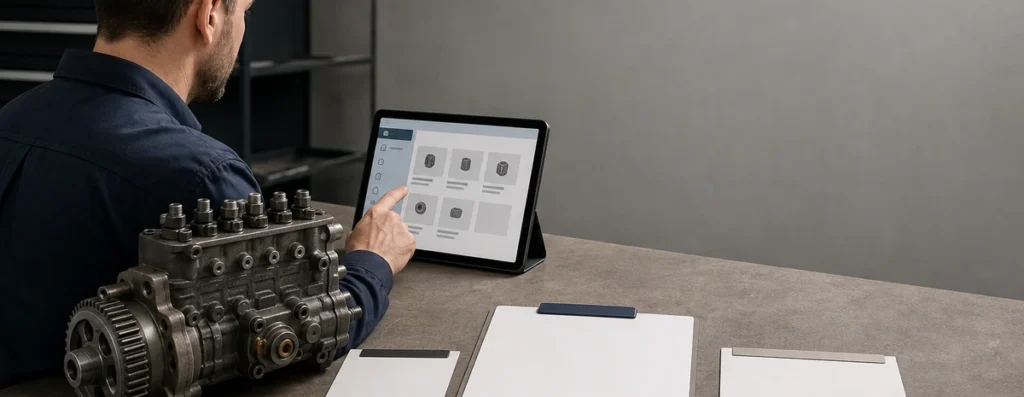
Route the request by application before searching: construction equipment, portable power or generators, marine engines, and forklifts each use different support paths. A part name that looks familiar across listings can belong to a different engine family, host machine, or operating environment.
Construction equipment
For excavators and related construction equipment, keep the old Doosan model and serial even if a current support page uses DEVELON or HD Hyundai naming. The official construction parts-service route describes a regional path, not proof that a legacy part is in stock. Use it to understand the network, then let an aftermarket channel verify the number and revision.
Portable power and generators
Portable compressors, light towers, and generators may sit in a separate support family from construction machines. Give the supplier the unit identity, engine plate, and service-item number; do not copy a construction result simply because both pages say Doosan.
Marine engines
Marine propulsion and auxiliary engines need a marine-aware route because installation, duty cycle, access, and onboard support differ from a land machine. Tell the supplier the vessel application, engine model and serial, region, and whether you need a service item, overhaul component, or larger assembly. Match the specialist’s stated coverage to your engine.
Forklifts
Forklift parts belong to a material-handling route, with truck model, configuration, engine identity, and serial information. A forklift catalog is not a construction, generator, or marine engine catalog. If the plate is unclear, photograph it with the component and ask what remains unconfirmed.
The region matters in all four cases. A locator, warehouse page, or storefront shows a possible path, not guaranteed stock, delivery, or identical terms. Once the application is clear, compare source categories on evidence rather than price.
What Is the Difference Between Genuine, Aftermarket, Remanufactured, and Used Doosan Engine Parts?
These source categories differ in origin, traceability, condition, documentation, support, and return risk, so the right choice depends on the application and downtime cost. “Genuine” or “OEM” identifies an intended manufacturer route only when the seller can substantiate it for the relevant product line; “aftermarket” identifies a non-OEM replacement route; “remanufactured” describes a component rebuilt to a stated process; and “used” describes prior service history that must be documented.
| Source type | Evidence to request | Main trade-off |
|---|---|---|
| Genuine/OEM | Product-line scope, seller status, part identity, and applicable terms | Reference confidence may be higher, but regional availability and commercial terms still need confirmation |
| Aftermarket | Fit match, manufacturer or source disclosure, condition, test or inspection records, and written returns | Can widen non-OEM options, but evidence quality varies by supplier and part |
| Remanufactured | Rebuild scope, replaced or measured items, test record, core policy, and warranty wording | May balance cost and serviceability, but the rebuild standard and core terms must be explicit |
| Used | Donor identity, service history where available, visible condition, number, photos, and return terms | May help with legacy equipment, but unknown wear and provenance increase decision risk |
The official portable-power parts route is a boundary for how genuine parts are described in that product line. It does not make an independent aftermarket supplier official or every listing interchangeable across applications.
Service exchange sits between a normal sale and a repair loop: the supplier provides a replacement unit while the old repairable component is returned under the program’s stated core terms. Only use that label when the supplier explains the core charge, return window, acceptable core condition, and what happens if the core is rejected.
Ask what evidence you will have if the part does not fit. A maintenance manager should also consider downtime, installation labor, core handling, records, and return cost. A listing price cannot replace those fields. Choose a source only when its evidence and support match the duty and consequences of delay.
What Are Commonly Replaced Doosan Engine Parts?
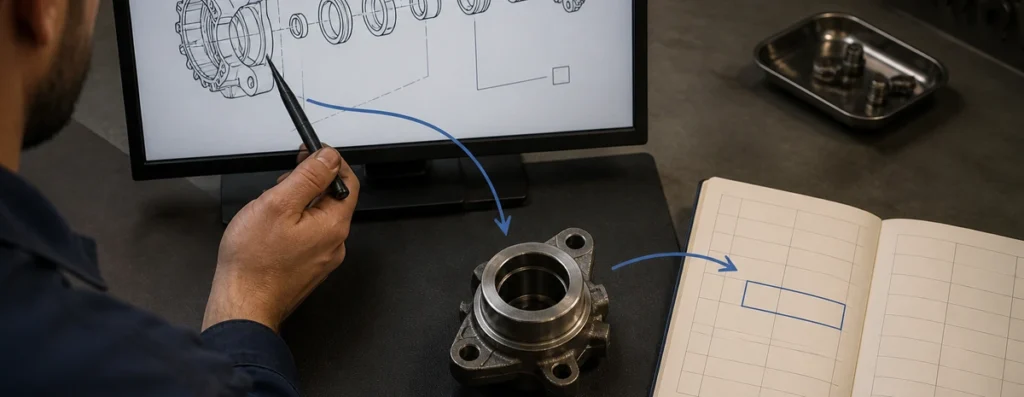
Common request categories include filters, gaskets, pumps, piston-and-liner kits, bearing kits, valve kits, and fuel or air components, but the exact engine lookup controls fit. The category helps you describe the symptom or maintenance job; it does not identify a universal part number.
Use these labels when starting a request:
- Routine service items: oil, fuel, and air filtration components, belts, and other scheduled-maintenance items.
- Sealing items: gaskets, seals, O-rings, and related pieces used to control fluid or combustion leakage.
- Cooling and water-pump items: pump assemblies, impellers or related service pieces where the engine design uses them, and cooling seals.
- Overhaul kits: piston-and-liner sets, ring sets, gasket kits, and other grouped components for a rebuild scope.
- Bearing and valve items: main or connecting-rod bearing kits, valve kits, guides, springs, or other valvetrain pieces when confirmed for the engine.
- Fuel and air components: injectors, pumps, hoses, intake pieces, and turbocharger-related items where the exact configuration supports that request.
An official construction-engine parts category page illustrates categories such as piston-and-liner, bearing, valve, and overhaul assemblies within its own product-line scope. That is useful vocabulary, not a promise that every category is stocked for every Doosan engine or that a component crosses from construction to generator, marine, portable-power, or forklift use.
Consider a buyer who asks for “a Doosan gasket” without the engine model and serial. Gasket describes a job, not the mating surfaces, thickness, material, bolt pattern, or revision. Add a photo of the old item and surrounding assembly, but ask the supplier to confirm the number against the engine identity. The same caution applies to a familiar filter or pump: shape can narrow a search while leaving fit unconfirmed.
If you do not know the category, describe the maintenance task, the location on the engine, the fluid or system involved, and what failed. A responsive aftermarket channel can translate that description into a candidate list, then request the identifiers needed to confirm it. Name the category first; approve the exact component only after the catalog and supplier checks are complete.
How Do Doosan Engine Parts Catalogs Work?
A parts catalog links an identified engine or machine to illustrations, part numbers, and product data so the buyer can compare a candidate before asking the supplier to confirm it. It is a lookup aid, not an order guarantee.
What can you see in an exploded diagram?
An exploded diagram separates neighboring components so you can see how a seal, cover, fastener, pump, or bearing relates to the assembly. Start with the identified engine or machine, filter to the relevant system, inspect the illustration, record the candidate number, and note any quantity or position marker. This visual sequence is especially helpful when the old part is damaged or when several similar pieces sit next to one another.
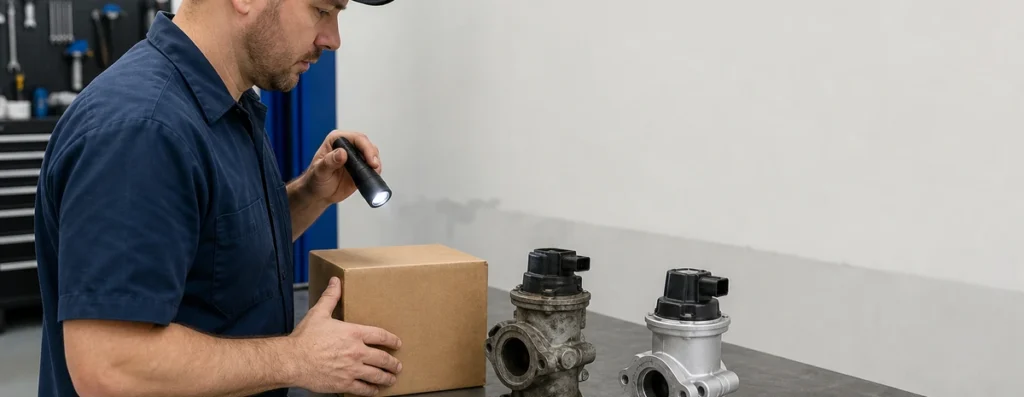
The DEVELON mobile parts book describes a lookup format built around illustrations, part numbers, and product data. An aftermarket channel can use that reference trail while remaining a separate, non-official seller. Preserve the diagram reference used for the quote.
When is a listed number still unconfirmed?
A listed number is still unconfirmed when the engine serial, configuration, revision, condition, or source status has not been matched. Online catalogs may use filters such as engine, electrical, service kit, OEM, or aftermarket; those filters help discovery, but a listing can remain copied, outdated, or broader than the actual application.
| Catalog field | What it narrows | Confirmation action |
|---|---|---|
| Engine or machine model | Family and host-equipment path | Match the model to the data-plate photo and application |
| Serial or revision range | Build version or change point | Send the exact serial and ask about supersession |
| Illustration and position | Neighboring assembly items | Compare the old component, location, and quantity |
| Part number and product data | Candidate identity and description | Ask the supplier to confirm fit, condition, and terms in writing |
Keep the distinction clear: search finds a page, filter narrows a family, inspect checks the diagram, record captures the number, and confirm turns it into an order decision. A marketplace seller may copy a number without proving fit, condition, or warranty. The catalog gets you closer; identifiers and written response finish the check.
How Can You Prevent Wrong-Fit or Unverified Doosan Engine Parts?
Prevent avoidable mistakes by matching the model, serial, machine application, part number, revision, condition, provenance, and written terms before payment. A part that looks close enough can still arrive after downtime has grown and be impossible to return once installed.
What should you check before paying?
Save this short sequence with the quote:
- Identity: Compare the engine model and serial with the data plate, machine record, and supplier quotation.
- Application: State whether the engine serves construction equipment, a generator or portable unit, a marine installation, a forklift, or another host.
- Number and revision: Check the existing number, supersession notes, position, and any revision or change point.
- Source category: Confirm whether the part is genuine/OEM, aftermarket, remanufactured, service-exchange, or used.
- Condition and provenance: Request clear photos and inspection or rebuild information where applicable.
- Commercial terms: Get written stock status, timing, warranty wording, return conditions, freight responsibility, and core terms.
- Fit decision: Ask the supplier to state what was matched and what remains unknown.
“Genuine” wording, seller confidence, and a marketplace rating do not replace this trail. The portable-power technical-publications path shows why manuals and serial information matter, but its product-line scope is not a universal authenticity decision.
What should you inspect when the part arrives?
Before installation, photograph the packaging, label, part number, configuration, connectors, mounting faces, and visible damage. Compare them with the quote and original component. Check seals, ports, threads, bolt holes, and electrical connections; do not force a near match into place. Confirm that the paperwork names the condition and source category you ordered.
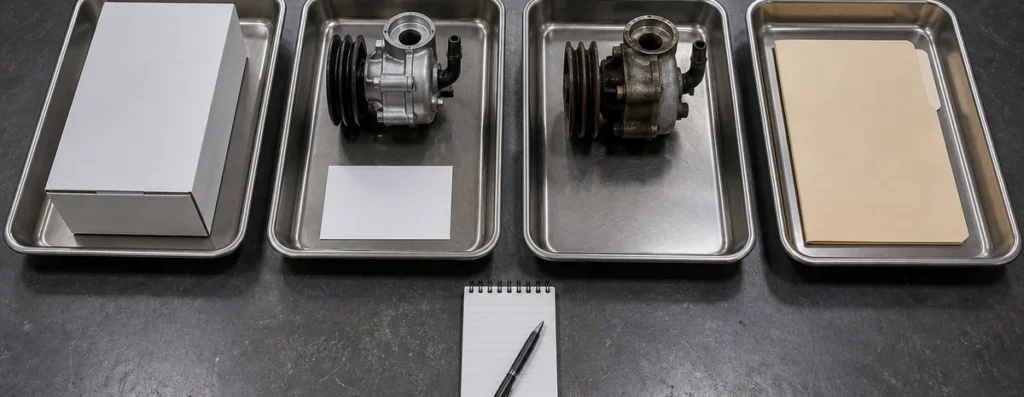
If a number, configuration, or label conflicts, pause installation and request a written fit or return decision. Keep the packaging unchanged while the supplier reviews it. Photos, listings, and seller labels are starting clues; observable identity and written terms make the purchase defensible.
Frequently asked questions
Can I order a Doosan engine part from a marketplace photo? Use the photo for discovery only. Ask for the engine model and serial, machine application, part number, revision, condition, provenance, and written return terms before treating the listing as a candidate for purchase.
Are Doosan and DEVELON parts the same? Construction support may use DEVELON or HD Hyundai routes, but the application and identifiers still need confirmation. Do not generalize a construction naming route to every generator, portable-power, marine, forklift, or legacy engine line.
Is an aftermarket Doosan part automatically lower quality? No universal ranking follows from the label. Compare fit evidence, documentation, condition, inspection or rebuild records, warranty wording, returns, and the downtime risk of the application.
What makes an aftermarket Doosan parts channel trustworthy? Look for clear non-OEM labeling, exact identifier matching, condition and provenance records, written commercial terms, and a responsive process for resolving fitment questions. A catalog page alone is not enough.
What is the most useful information to send an aftermarket supplier? Send the application, engine model, engine serial, machine serial where applicable, data-plate and part photos, existing part number, revision, required condition, destination, and the date by which you need a decision.
For a non-OEM Doosan engine part, the most practical starting point is an aftermarket channel that matches the application and can confirm identity, condition, source status, and written terms; official catalogs remain useful for cross-checking. Route by application and region, send a complete identifier brief, use the catalog as a lookup aid, and compare source categories by evidence rather than price alone.
- Treat photos, listings, and seller labels as starting points until verified.
- Ask for written fit, condition, provenance, warranty, returns, timing, and core terms.
- Keep construction, portable-power, generator, marine, and forklift routes separate until the application is confirmed.
- If an identifier conflicts, pause installation and request a written decision.
For a fit-checked aftermarket quote, send our aftermarket parts channel the application, engine model, engine serial, machine serial where applicable, existing part number, revision, required condition, and destination. Request written provenance, stock, timing, warranty, returns, and core terms for the specific order. No named seller, model, price, authorization, warranty, stock, or delivery guarantee is implied here; the channel positioning is aftermarket and non-official.
Meta description: Find a practical aftermarket route for Doosan engine parts, match the application and serial information, and compare source evidence before ordering.