How to Choose Wirtgen Track Shoe: The Complete Selection Guide
Why Track Shoe Selection Matters More Than You Think
Your Wirtgen milling machine is a precision instrument capable of removing pavement with millimeter accuracy. But all that precision depends on one often-overlooked component: the track shoe.
A failed track Pads on a Wirtgen W 200 or W 2100 doesn’t just stop the machine—it stops the entire project. Worse, poor-quality track shoes fail prematurely, shedding rubber and damaging expensive undercarriage components like rollers, sprockets, and chains.
At LongTrust, we’ve manufactured track shoes for over a decade. Our products equip machines on six continents, and many international suppliers source from our factory and rebrand our shoes for their local markets. Here’s what we’ve learned about what makes a track shoe last—and what causes cheap imitations to fail.
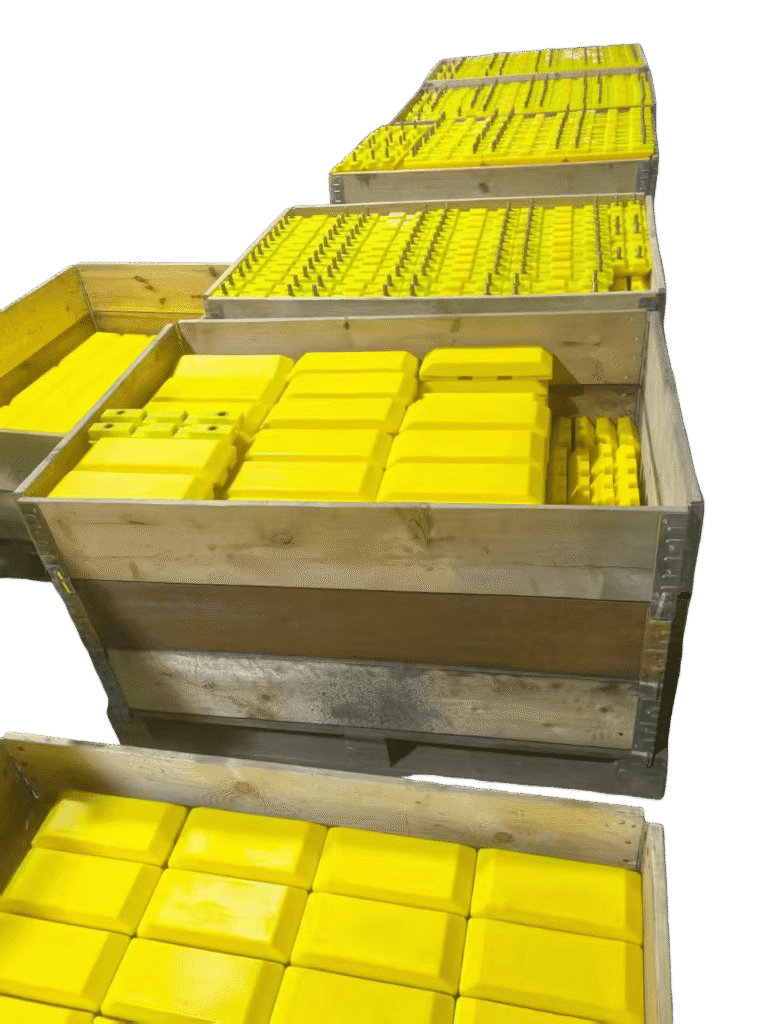
The Anatomy of a Quality Wirtgen Track Shoe
Before you can choose the right track shoe, you need to understand what goes into a good one. Quality isn’t something you can see from the outside—it’s built into the materials and the manufacturing process.
1. Raw Materials: The Foundation of Long Life
Every great track shoe starts with the right raw materials. At LongTrust, we use:
- Natural rubber for flexibility and tear resistance
- Carbon black for UV protection and abrasion resistance
- Steel inserts precision-formed to match Wirtgen OEM specifications
The rubber compound isn’t just mixed—it’s engineered. The ratio of natural rubber to carbon black determines how the shoe performs in different conditions. Too little carbon black, and the rubber degrades quickly under sunlight and ozone. Too much, and the shoe becomes brittle and cracks under load.
The LongTrust Difference: We’ve spent years perfecting our rubber compound formula. It’s why our track shoes consistently outlast cheaper alternatives in real-world conditions.
2. The Rolling Process: Three Passes, Four to Eight Hours Each
Once the rubber compound is prepared, it must be bonded to the steel insert. This isn’t a simple one-step process. Proper bonding requires compression rolling—and plenty of patience.
At LongTrust, we roll each track shoe three separate times. Between each rolling pass, the shoe rests and cools for 4 to 8 hours. This cooling period is critical. It allows the rubber to “relax” into its final shape and ensures the molecular bonds between rubber layers are stable.
Why This Matters: Rushing the rolling process—skipping passes or shortening cooling times—creates internal stresses in the rubber. Those stresses eventually cause the rubber to crack or separate from the steel.
3. Vulcanization: 50 Minutes of Heat and Pressure
The final step is vulcanization—curing the rubber under heat and pressure to achieve its final properties. This is where the rubber becomes tough, elastic, and durable.
Each LongTrust track shoe spends a full 50 minutes in the vulcanization press. During this time, heat activates the curing agents in the rubber compound, creating cross-links between polymer chains. The result? A shoe that resists tearing, abrasion, and chunking.
The Shortcut: Some manufacturers cut vulcanization time to 30 minutes or less to increase production speed. The result is under-cured rubber that wears quickly and fails prematurely.
Why Cheap Track Shoes Fail: Three Common Causes
Understanding why low-quality track shoes fail helps you recognize quality when you see it. Based on our experience manufacturing and testing thousands of shoes, here are the most common failure modes:
Cause #1: Insufficient Cooling Time Between Rolling Passes
Remember those 4-to-8-hour cooling periods we mentioned? Cheap manufacturers skip them. They rush shoes through the production line, rolling pass after pass without adequate cooling.
The result? The rubber never stabilizes. Internal stresses remain trapped in the material. Weeks or months later, those stresses manifest as cracks—and eventually, the rubber separates from the steel.
Cause #2: Shortened Vulcanization Time
Vulcanization is chemistry. It requires specific time and temperature to complete. When manufacturers cut vulcanization time to boost output, they produce shoes with under-cured rubber.
Under-cured rubber feels different—softer, almost “green.” It wears faster, chunks out under load, and loses its bond to the steel insert. The shoe might look fine when new, but it won’t last.
Cause #3: Contaminated Bonding Surfaces
This is a subtle but surprisingly common problem. Before the rubber is bonded to the steel, the steel receives a coating of adhesive. If anything contaminates that adhesive layer, the bond fails.
One unexpected culprit? Sweat. On hot days, workers applying adhesive may have perspiration on their hands. If they touch the steel plate after applying adhesive, the salts and oils in their sweat react with the adhesive chemistry. The result is a weak spot in the bond—and eventually, rubber detachment exactly where that worker’s fingers touched the plate.
Quality Control at LongTrust: We’ve eliminated this problem through strict handling protocols. Adhesive application is automated where possible, and when manual application is required, workers wear protective gloves and follow严格的 procedures to prevent contamination.
How Long Should Quality Track Shoes Last?
This is the question every contractor asks. The answer depends on conditions—asphalt type, operating surfaces, machine weight, and operator habits all affect wear.
However, with proper selection and operation, a quality Wirtgen track shoe should last approximately one year of normal use. That’s the benchmark we’ve established through thousands of field reports from customers worldwide.
The LongTrust Advantage: Our track shoes consistently achieve this one-year benchmark. And because we manufacture directly, we offer this level of durability at a price point that delivers exceptional value. You’re not paying for brand names or distribution layers—you’re paying for quality materials and proven processes.
Choosing the Right Wirtgen Track Shoe: A Step-by-Step Guide
Now that you understand what makes a quality shoe, here’s how to select the correct one for your machine:
Step 1: Identify Your Wirtgen Model
Track shoes aren’t one-size-fits-all. Different Wirtgen models use different shoe sizes, bolt patterns, and rubber compounds. Common models include:
SeriesCommon ModelsTypical Track Shoe Size
Small Milling Machines W 50, W 50 H, W 50 DC Compact shoes with tighter bolt spacing
Medium Milling Machines W 100, W 100 H, W 100 L Standard utility-sized shoes
Large Milling Machines W 195, W 200, W 205, W 2100 Heavy-duty shoes with reinforced steel
Step 2: Check Your Part Number
The fastest way to ensure a correct fit is to reference the original part number. Common Wirtgen track shoe part numbers include:
- 2811585 (EPS Plus Track Shoe Kit for W 50/W 100 series)
- 2227956 (Standard track shoe for W 200 series)
- 2088472 (Heavy-duty track shoe for W 2100)
If you don’t have the part number, don’t worry. Send us your machine model and serial number, and we’ll identify the correct shoe from our database.
Step 3: Consider Your Operating Conditions
Different job sites require different track shoe characteristics:
ConditionRecommended Shoe Type
Highway milling (abrasive) Harder compound for abrasion resistance
Urban work (frequent turning), Flexible compound with good side-load resistance
Soft ground or asphalt, standard compound for traction
Recycling applications: Reinforced shoes with extra steel protection
Step 4: Choose Complete Kits for Balanced Performance
Track shoes wear as a set. Replacing individual shoes on a track creates uneven wear patterns and reduces the life of the entire undercarriage.
At LongTrust, we supply complete track shoe kits—everything needed to replace all shoes on one track. Order two kits for a full machine replacement (left and right tracks). This ensures:
- Uniform wear across all shoes
- Consistent traction and machine stability
- Maximum life from your undercarriage investment
Why Global Suppliers Choose LongTrust
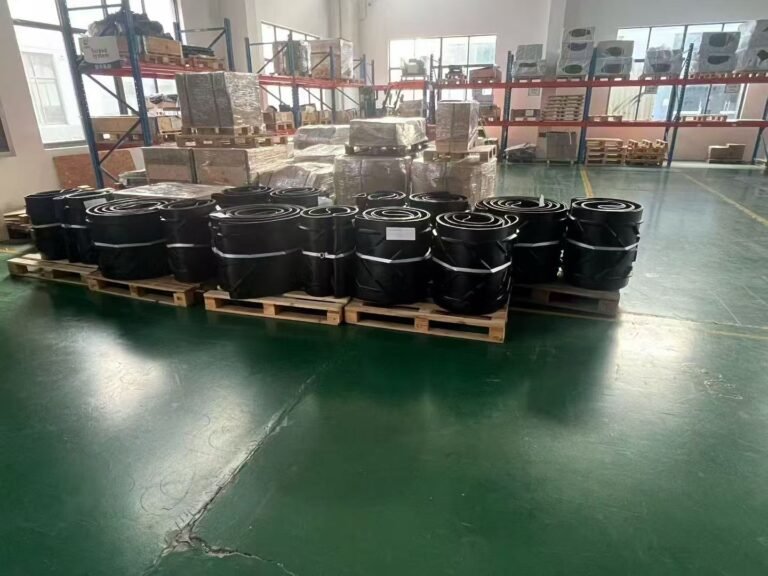
We don’t just sell track shoes—we manufacture them. Our 6,000-square-meter facility produces thousands of track shoes annually, supplying distributors and equipment dealers worldwide.
What This Means for You:
- Factory-Direct Pricing: No middleman markups. You pay for quality materials and precise manufacturing, not layers of distribution.
- Quality Control: We control every step of production, from rubber compounding to final inspection. Every shoe meets our stringent standards before shipment.
- Consistent Supply: With massive inventory and continuous production, we maintain a stock of popular sizes and part numbers year-round.
- Global Experience: Our shoes perform in climates from Arctic cold to desert heat. We’ve refined our compounds and processes based on real-world feedback from six continents.
The Proof: Many international parts suppliers purchase from LongTrust and rebrand our products for their local markets. When you buy from us directly, you’re getting the same quality they do—at the source.
Why Choose LongTrust Track Shoes
| Feature | LongTrust Standard | Why It Matters |
| Raw Materials | Natural rubber + carbon black | Superior wear and environmental resistance |
| Rolling Process | Three passes, 4-8 hour cooling between passes | Eliminates internal stresses, prevents separation |
| Vulcanization | Full 50-minute cure | Complete cross-linking for maximum durability |
| Bonding | Controlled adhesive application with contamination prevention | Secure rubber-to-steel bond that lasts |
| Inspection | 100% visual and dimensional check | No defective shoes leave our facility |
| Warranty | 1-year full warranty | Complete peace of mind |
Common Questions About Wirtgen Track Shoes
Q: How do I know when to replace my track shoes?
A: Replace track shoes when:
- The rubber depth wears below 50% of the original
- Visible cracks appear in the rubber
- Rubber begins to separate from the steel
- Machine traction noticeably decreases
- Uneven wear affects machine stability
Q: Can I replace just one track shoe?
A: We strongly recommend against it. Replacing individual shoes creates uneven traction and accelerates wear on other undercarriage components. Always replace complete sets.
Q: Are LongTrust track shoes compatible with genuine Wirtgen chains and rollers?
A: Yes. Our shoes are engineered to Wirtgen OEM specifications for bolt patterns, dimensions, and weight. They work seamlessly with original undercarriage components.
Q: Do you offer volume discounts for dealers and fleets?
A: Absolutely. As a manufacturer, we welcome partnership inquiries from distributors, equipment dealers, and large fleet operators. Contact our sales team for customized pricing.
Don’t Let Worn Track Shoes Slow You Down
Your Wirtgen milling machine represents a significant investment. Protect that investment with track shoes built to last—shoes that combine quality materials, proven processes, and factory-direct value.
Choose LongTrust for:
Factory-direct pricing from the source
Premium natural rubber + carbon black compound
Three-roll process with full cooling between passes
50-minute vulcanization for complete cure
Contamination-free bonding for secure attachment
Complete kits for balanced performance
1-year warranty on every shoe