
Yanmar marine engine Original&aftermarket parts
As a trusted supplier of Yanmar parts, we offer a comprehensive range of OEM, genuine, and aftermarket solution with competitive price. Our extensive inventory is designed to perfectly fit a wide variety of Yanmar marine and marine engines. Whether it is an original factory part or an aftermarket part, we provide highly competitive pricing without compromising on quality. All our products come with 6-24 mounths warranty, ensuring complete peace of mind and dedicated support for any quality-related concerns.Occasionally, there will be discounted parts available at very competitive prices.
No posts
Catalog
Contact us
Whatsapp: +86-19831860669
Wechat: 19831860669
Gmail: longtrustcn@gmail.com

Why More Vessel Owners Are Sourcing Yanmar Marine Engine Parts from China
When a Yanmar marine engine needs maintenance or a major overhaul, parts sourcing directly affects three things: downtime, repair cost, and engine reliability. Traditionally, many vessel owners and ship management companies have relied on official channels, regional agents, or trading hubs such as Dubai and Singapore. In recent years, however, a growing number of buyers have started sourcing Yanmar parts—especially marine engine parts—from China.
This is not simply about finding the lowest price. China’s aftermarket supply chain offers a combination of broad parts availability, price transparency, alternative-part options, and cost-effective logistics. Below are four practical reasons why China has become a serious sourcing option for Yanmar marine engine parts.
1. A Huge Market Means More Parts, More Suppliers, and More Transparent Pricing
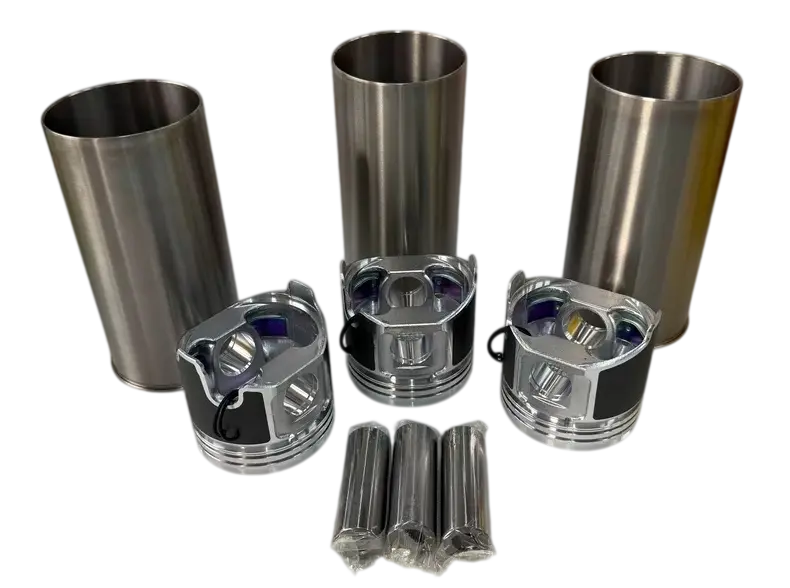
China has a massive aftermarket for marine engines, generator sets, construction machinery, and agricultural equipment. Yanmar engines have a significant installed base in these sectors, and that demand supports a deep supply chain for Yanmar-compatible parts: cylinder liners, pistons, piston rings, bearings, gaskets, overhaul kits, fuel injection pumps, injectors, water pumps, oil pumps, turbochargers, sensors, and more.
A large market brings an important advantage: more suppliers, greater price transparency, and fewer layers of middlemen. Buyers can compare quotes across multiple channels instead of accepting a single regional agent price.
Take a Yanmar 6N21 major overhaul kit as an example. Based on typical market quotations—which can vary by configuration, exchange rate, stock availability, and supplier—the price difference is striking:
| Market | Indicative Price for a 6N21 Major Overhaul Kit |
|---|---|
| China | Around RMB 50,000 |
| India | Often above RMB 100,000 |
| Dubai | Possibly above RMB 200,000 |
The point is not that parts are “mysteriously cheap.” The point is that China’s aftermarket is highly competitive, inventory turns quickly, and channel layers are compressed. For vessel owners managing repair budgets, this price gap is difficult to ignore.
2. Large Inventory Can Create Opportunities—Including Below-Normal Prices on Genuine Parts
A large market also means large inventory. Marine parts come in many models and batches, and suppliers sometimes end up with excess stock. When that happens, they may reduce prices to release working capital. As a result, buyers may find genuine parts or OEM-channel parts offered below normal official-channel prices.
This can be a real cost-saving opportunity, but it should be handled carefully:
- Confirm the part number, batch, packaging, and source documentation.
- Ask for real photos of the actual part and packaging.
- Request a warranty statement and after-sales terms.
- Verify whether the part is genuinely an OEM-channel item or a high-quality alternative.
For major overhauls and critical marine engine components, do not rely on the word “genuine” alone. Reliable suppliers should be able to provide traceable information, inspection records, and clear warranty boundaries.
3. Plenty of Aftermarket Alternatives—With a Wide Range of Quality and Pricing
China has many factories producing aftermarket alternatives for Yanmar engines. It is important to be honest: quality varies. Some low-cost alternatives are not suitable for demanding marine operating conditions. However, there are also manufacturers producing alternatives with good materials, machining accuracy, and durability—some of which can be close to original quality for certain applications.
The price advantage is significant. Aftermarket alternatives are commonly priced at around one-half to one-quarter of the genuine part price, offering strong value for the right application.
The key is to match the part grade to the use case:
- For non-critical components, wear parts, or temporary repairs, high-value aftermarket alternatives can reduce maintenance costs.
- For main propulsion engines, long-distance vessels, and major overhaul critical parts, choose suppliers that provide inspection records, stable quality, and clear warranties.
A responsible supplier should offer tiered options—not pretend that every aftermarket part is “original quality.” The right question is not simply “Is it cheap?” but “Is this grade suitable for my engine, my vessel, and my operating profile?”
4. Lower Logistics Costs and Well-Developed Shipping Networks
China has one of the world’s most developed port, shipping, and air freight networks. For many destinations in the Middle East, Southeast Asia, Africa, and Europe, logistics costs from China are highly competitive compared with traditional parts hubs.
Marine engine parts are often high-value, small-to-medium-sized items. That makes them well suited to air freight when a vessel is waiting on a critical part, while heavier items such as overhaul kits, cylinder liners, and pistons are usually shipped by sea.
Experienced Chinese exporters are also familiar with export packing, shipping marks, packing lists, and customs documents, which helps reduce friction in the delivery process.
What to Check Before Buying Yanmar Parts from China
Sourcing from China can be highly effective, but the result depends on supplier selection. Before placing an order, it is worth checking:
- Engine nameplate and part numbers — provide clear photos to avoid model confusion.
- Actual part photos and packaging details — especially for genuine or OEM-channel claims.
- Warranty terms — confirm coverage, claim process, and exclusions.
- Part grade — distinguish between genuine-channel parts, stock clearance items, and aftermarket alternatives.
- Supplier experience — ask whether they have exported marine engine parts before and can handle export documents and shipping.
- Urgency vs. cost — use air freight for emergency repairs and sea freight for planned overhauls.
Conclusion
More vessel owners are sourcing Yanmar marine engine parts from China because China offers a combination of broad availability, transparent competition, cost-effective alternatives, and efficient logistics. It is not the only sourcing option, but for buyers who value parts availability, price competitiveness, and delivery flexibility, it deserves serious evaluation.
If you are looking for Yanmar marine engine parts, send us your engine model, nameplate photo, and required part numbers. We can help verify the model, recommend suitable part options, and provide a quotation based on your budget, operating conditions, and delivery timeline—whether you need genuine-channel parts, stock items, or high-quality aftermarket alternatives.
Disclaimer: Yanmar is a trademark of its respective owner. We are an independent aftermarket parts supplier and are not affiliated with, endorsed by, or authorized by Yanmar. Price examples are indicative market quotations and may vary by model, configuration, exchange rate, stock availability, and supplier.


